
Can a Zoho Sites based website be optimized for speed?
his is a question we hear quite often. Many believe that using a closed software as a service platform means giving up control over performance. We decided to treat our own site as a proving ground to see what is actually possible.
// CONTEXT
Why speed matters for growth
Our primary motivation was simple: user experience comes first. A fast site feels better for the visitor. Beyond that, search engines and modern artificial intelligence tools prioritize sites that are technically sound and quick to load. If the foundation is slow, the content loses its impact.
Read the article about the importance of SEO for AI.
The reality of a moving target
This process taught us that optimization is very much a moving target. The technology stack behind every website is constantly shifting. For example, during our audit, we discovered that the LinkedIn Insights Tag was pulling in an outdated library. This was flagged under best practices even though we had not changed anything ourselves. External scripts and tools evolve, and they can impact your scores without warning. It is always a work in progress.
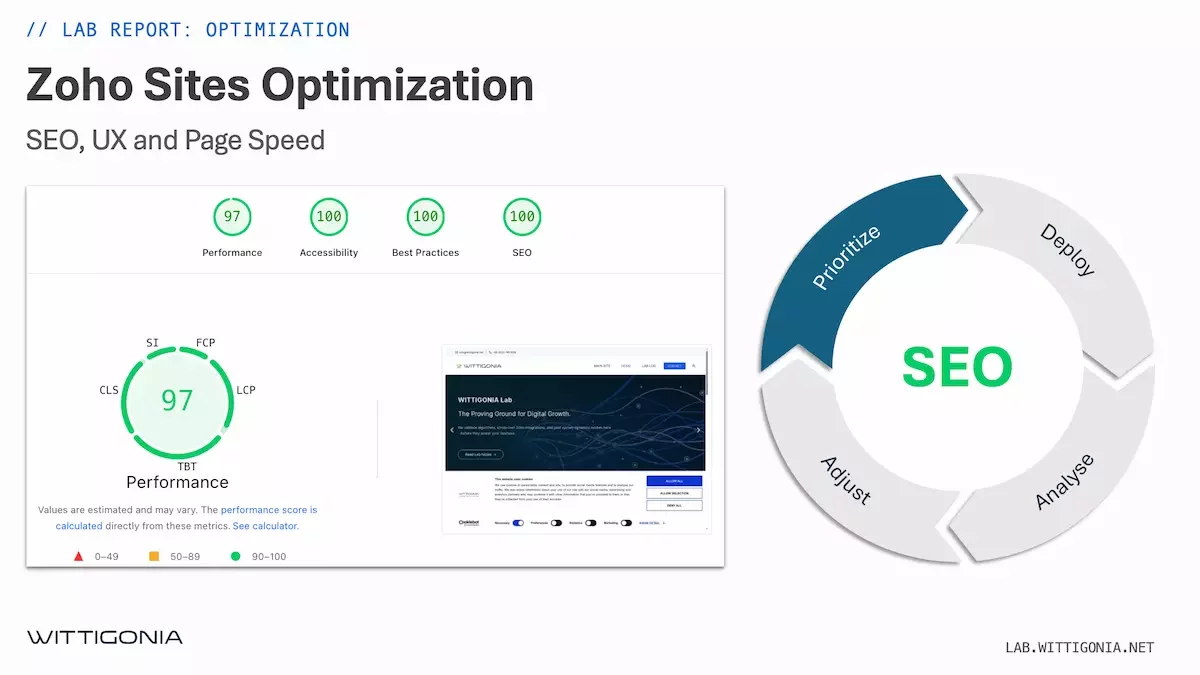
// Our Optimization Protocol
We followed a specific checklist to get our mobile scores into a better range.
Audit the Third-Party Weight: We moved all non-essential tracking pixels into Google Tag Manager to prevent them from slowing down the initial page load.
Strategic Deferral: We configured heavy scripts like live chat to load only after the main page content was fully ready.
Image Precision: We swapped heavy png and jpeg files for modern formats like webp.
Accessibility First: We replaced or removed any elements that made it difficult for visitors to navigate or read comfortably, such as color-dependent links.
// TECH STACK
The Tools of the Trade
To get the job done, we relied on a specific set of tools: Google Search Console, PageSpeed Insights, Zoho Sites, Usercentrics for consent management, and Google Tag Manager to orchestrate the timing of our scripts.
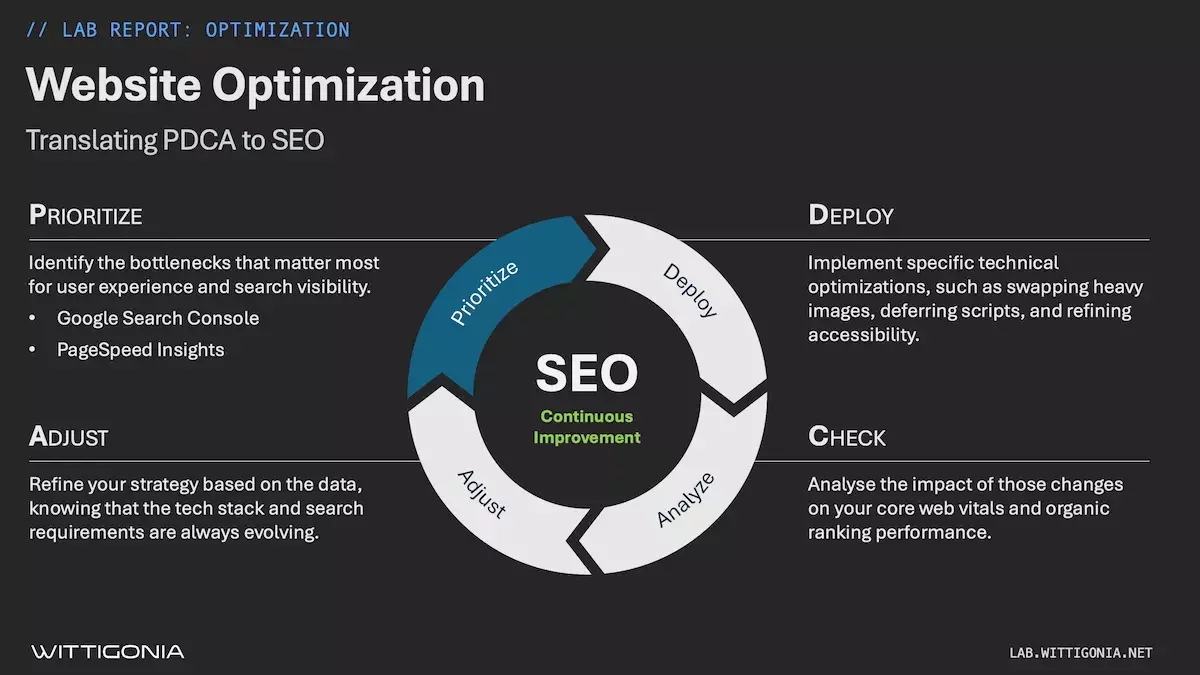
Continuous Improvement: The PDCA Cycle translated to SEO
To stay ahead, we apply the PDCA framework to our digital ecosystem:
- Prioritize: Identify the bottlenecks that impact users and search ranking.
- Optimize: Deploy technical fixes, from image compression to script deferral.
- Analyse: Check the data to see if the changes actually improved performance.
- Adjust: Refine the strategy as the tech stack and search requirements evolve.
// Summary: 5 Steps to Optimize Zoho Sites for Speed
Based on our lab findings, follow this technical protocol to improve your digital performance:
- Audit Third-Party Weight: Audit and move non-essential tracking pixels into Google Tag Manager to prevent them from slowing down the initial page load.
- Configure Strategic Deferral: Set heavy scripts, such as Zoho SalesIQ live chat, to load only after the main page content is fully ready using the Window Loaded trigger.
- Optimize Image Precision: Convert heavy PNG and JPEG files into modern WebP formats and ensure every image has explicit width and height dimensions to prevent layout shifts.
- Clean Header Code: Identify and remove redundant synchronous scripts from the Zoho Sites Header and replace them with asynchronous versions.
- Prioritize Accessibility: Verify that all links are distinguishable and meet contrast requirements, replacing color-dependent links with high-contrast, accessible buttons.
// Conclusion
The results show that you can achieve high performance while staying on a platform you enjoy using. It just takes a bit of technical curiosity and a willingness to keep testing. If you find yourself needing some help with optimizing your own site or working through these technical hurdles, please feel free to reach out to us. We would be happy to discuss how we can apply these lab-tested strategies to your project.
TL;DR Optimizing a Zoho Site is entirely feasible but requires staying proactive. Because technology is always changing, performance is a moving target rather than a one-time fix. Focus on the user experience and the technical scores will follow.
We cover this kind of setup in more depth on our Zoho Optimization service page.